Global actors convene in China under the food systems integrated program
Chinagate.cn, March 25, 2026 Adjust font size:
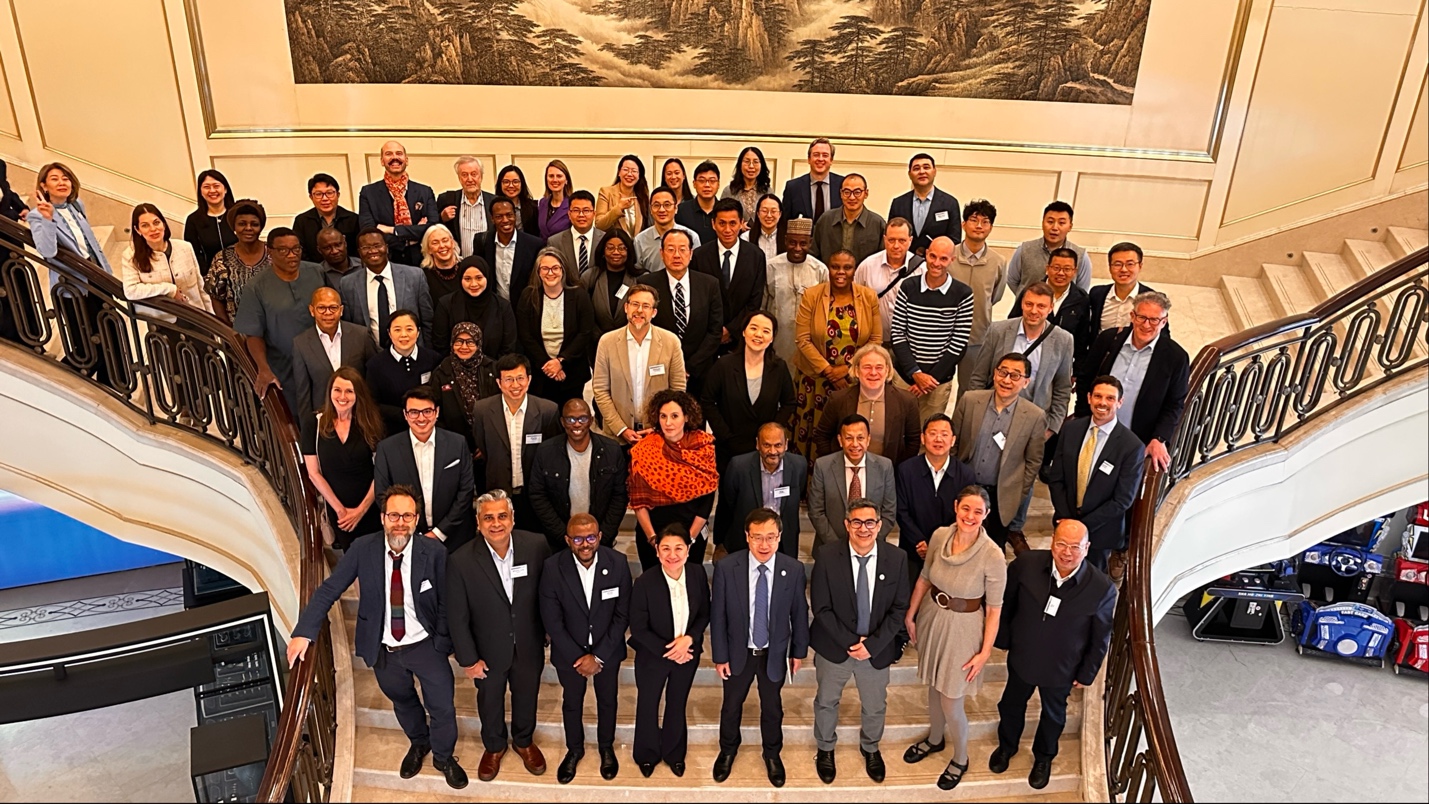
Food Systems Integrated Program (FSIP) Aquaculture Workshop convening in Fuzhou, China
Government representatives from Angola, Namibia, South Africa, India, Ghana, Nigeria, Kazakhstan and China gathered in Fuzhou, China, from 16–17 March for the GEF-8 Food Systems Integrated Program (FSIP) Aquaculture Workshop. The event brought together the FSIP co-lead agencies, the International Fund for Agricultural Development (IFAD) and the Food and Agriculture Organization of the United Nations (FAO), along with the Global Environment Facility (GEF) Secretariat, The Nature Conservancy and private sector actors, including Olam Agri.
Aquaculture reached a historic milestone in 2022, surpassing capture fisheries for the first time and accounting for 50.9 percent of global aquatic animal production. With global production reaching 130.9 million tonnes, aquaculture has become the fastest-growing food production system in the world. Aquatic foods provide 15 percent of the animal protein consumed globally and support the livelihoods of more than 22 million people. Despite this rapid growth, the sector faces interconnected challenges, including climate change impacts, environmental sustainability concerns, complex regulatory frameworks, limited access to finance, and constraints in accessing quality inputs and markets.
Against this backdrop, and held alongside the First FAO–CFA Joint International Conference on Sustainable Aquaculture, the workshop creates an opportunithy to strengthen collaboration and advance practical solutions for sustainable aquaculture development across regions.
Strengthening partnerships and private sector engagement
The Food Systems Integrated Program (FSIP) supports countries in strengthening sustainable food production systems as a pathway to improved food security, environmental sustainability and resilient rural livelihoods. Within the programme, IFAD plays a leading role in advancing private-sector engagement and market-driven solutions, linking small-scale producers with value chains, finance, and technology. This approach reflects IFAD’s long-standing experience in supporting inclusive rural development and building partnerships that enable smallholders and aquaculture producers to participate in growing markets.
IFAD highlighted the importance of building stronger integration between producers, financial institutions, and private sector actors across aquaculture value chains. By facilitating partnerships and knowledge exchange, the FSIP aims to support countries in developing bankable investment opportunities that can attract private capital while ensuring environmental sustainability and inclusive growth.
“Integration drives the alignment of all FSIP projects, enabling collaboration across governments, development partners, and the private sector to scale sustainable solutions," according to Michael von During, FSIP Technical Specialist at IFAD, “The ‘I’ in FSIP—Integration—drives the alignment of all 32 projects under this program so that its total impact is greater than the sum of its parts.” Private-sector engagement was highlighted as a critical driver in linking small-scale producers to value chains, finance, and technology.
FAO plays a central role in providing technical expertise, policy guidance and global standards to support sustainable aquaculture development, including through the recently adopted supports countries in strengthening governance frameworks, spatial planning, technical capacity and knowledge exchange to ensure that aquaculture growth is environmentally responsible and aligned with broader food systems transformation.
“Aquaculture has significant potential to contribute to sustainable food systems transformation, but realizing that potential requires coordinated action across governments, development partners and the private sector,” said Hernan Gonzalez, FSIP Coordinator at FAO. He also noted that the new global guidelines provide countries with a framework for responsible sector development while strengthening food security, livelihoods, and ecosystem health.
Country perspectives
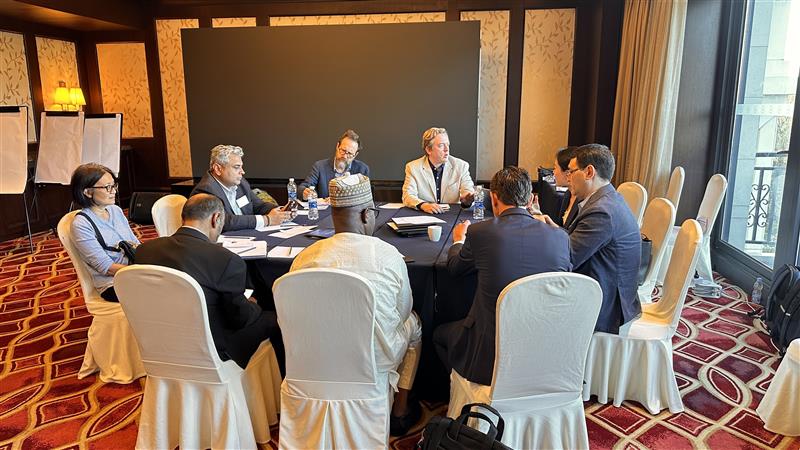
China, the world’s largest aquaculture producer, shared lessons from its experience in expanding production while improving sustainability and technological innovation. Other countries, including India and South Africa, also presented their experiences with addressing governance, feed and seed challenges to support collaborative learning.
Participants also shared experiences in sustainable production practices and technological innovation. Field visits to aquaculture operations in Ningde, Fujian Province, demonstrated offshore farming and seaweed production, emphasizing the importance of investment, technology adoption, and knowledge exchange.
Yinghao Xue from the Rural Energy and Environment Agency, China's Ministry of Agriculture and Rural Affairs (MARA), announced that the GEF-8 FSIP China project “Ecological and Low-Carbon Food Systems”, jointly implemented by MARA and FAO, will be officially initiated this year. The project aims to transform agrifood systems in China through low-carbon, climate-resilient, and environmentally friendly production practices, including sustainable aquaculture, which will contribute to the global agrifood system transformation.
Peter Umunay from the Global Environment Facility Secretariat noted that the Food Systems Integrated Program provides an important platform for countries and partners to exchange knowledge and accelerate solutions that support sustainable food systems.
Emerging priorities for collaboration
Participants identified three interconnected priority areas for future cooperation under the Food Systems Integrated Program
First, strengthening and activating the aquaculture Community of Practice is essential for driving collaboration. People are the heart of the food systems transformation and sustained progress depends on active engagement, knowledge exchange and collective identification of priorities focus for advancing a sustainable aquaculture sector across countries.
Second, deeper synergies and cooperation across programs and countries are needed to maximize impact. Aligning the FSIP with related initiatives can strengthen international cooperation and support coordinated efforts toward sustainable aquaculture and broader food system transformation.
Third, investing in and strengthening aquaculture value chains is critical to scaling sustainable solutions. Promoting innovative financing and building partnerships with the private sector will help scale sustainable aquaculture practices, technologies, and market opportunities.
With global aquatic production expected to reach 205 million tonnes by 2032, FSIP’s integrated approach, linking private-sector engagement, smallholder inclusion, and resilient food systems, offers a pathway to sustainable and inclusive growth in aquaculture worldwide.